Black Peak
A winter overnight on one of Wānaka's most iconic summits, knee-deep snow, a windy ridge camp, and a pre-dawn ice climb to catch the sunrise.
Read:
4 mins
Location:
Wanaka, New Zealand
Date:
Our Journey
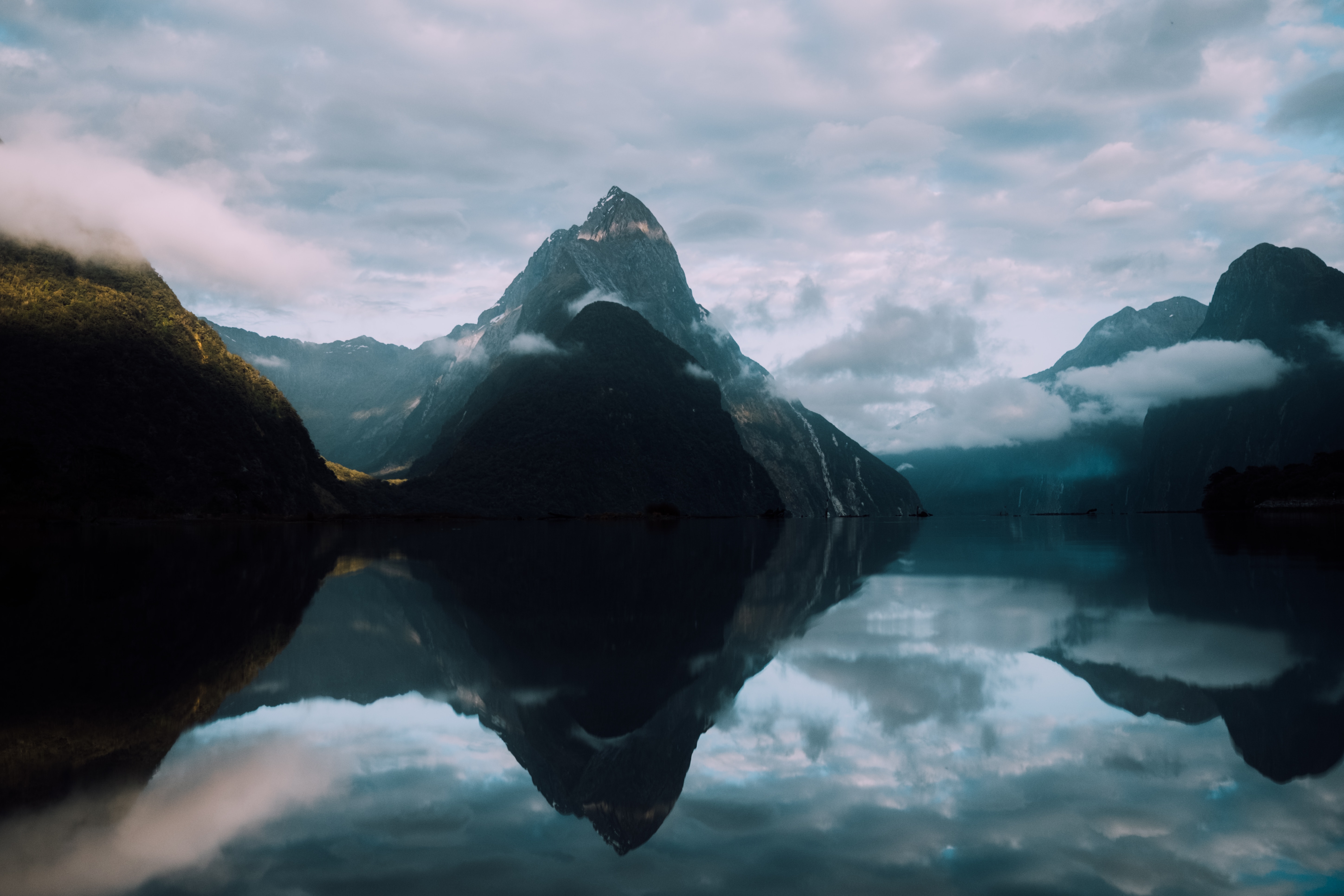
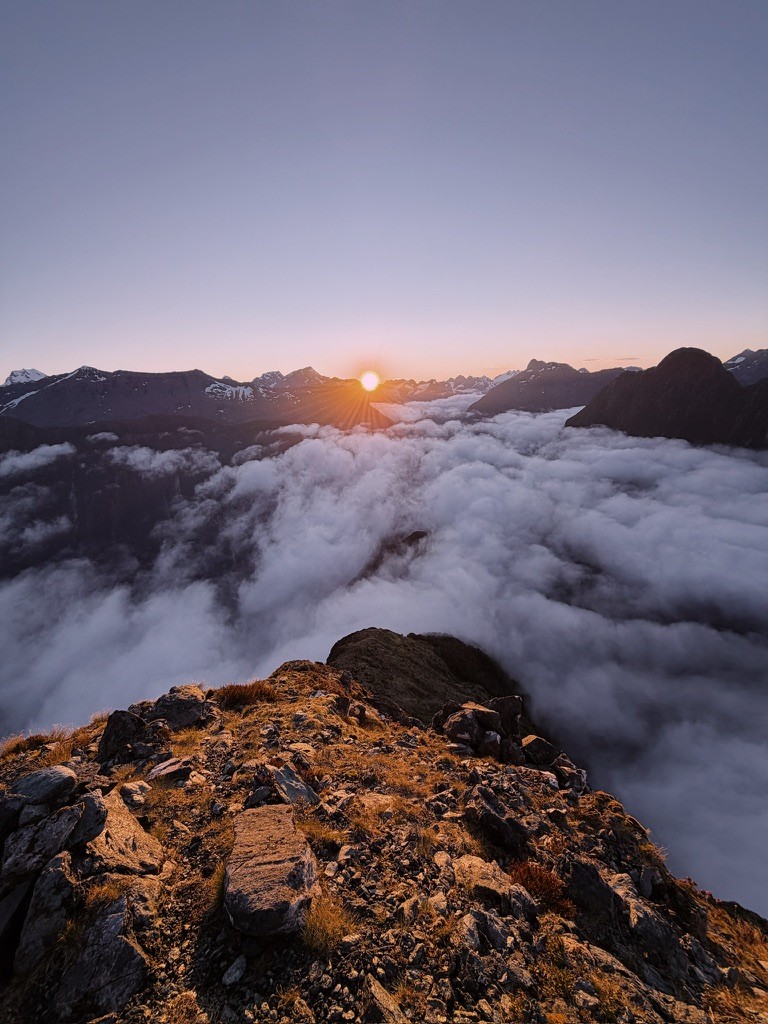
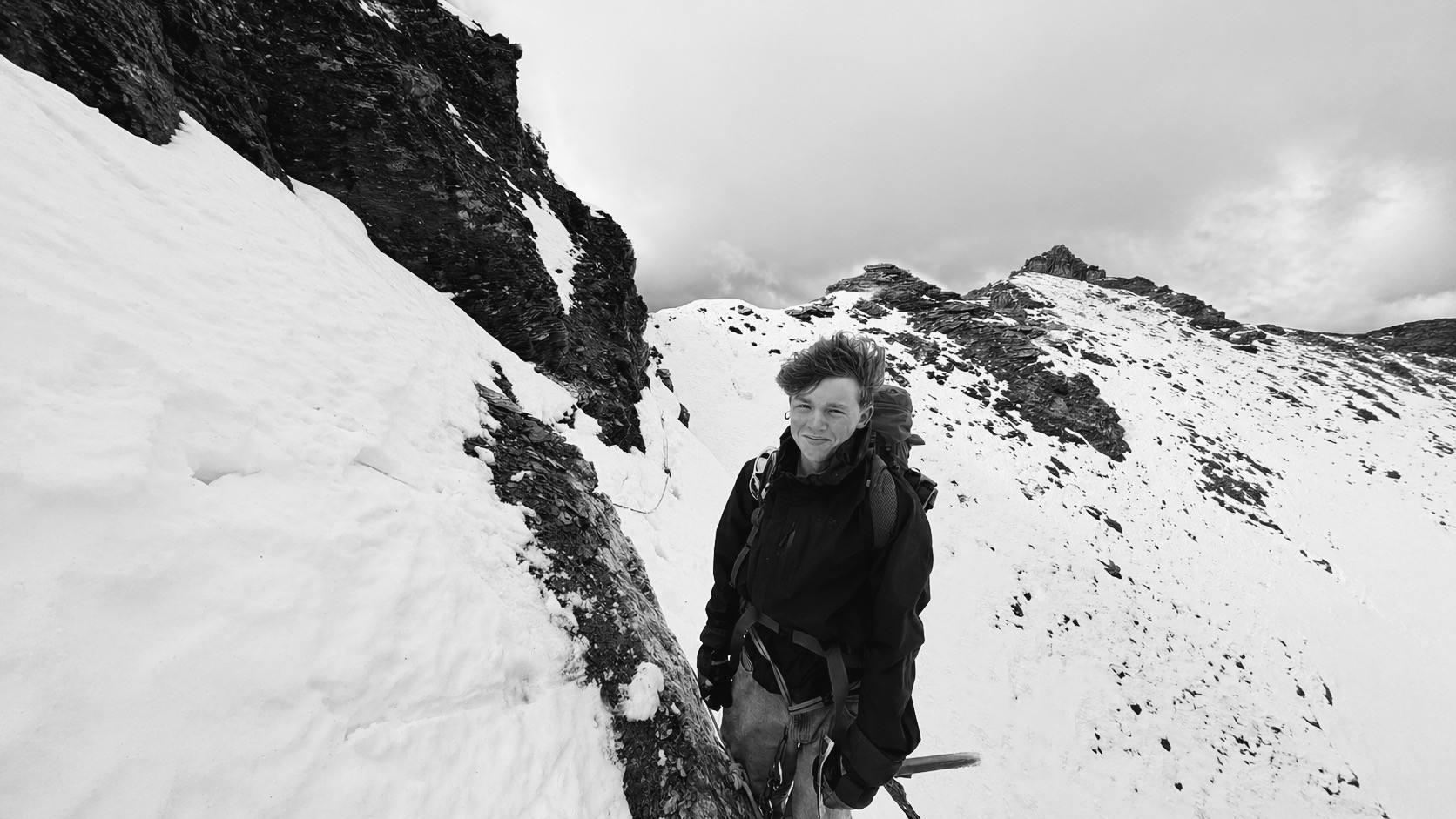
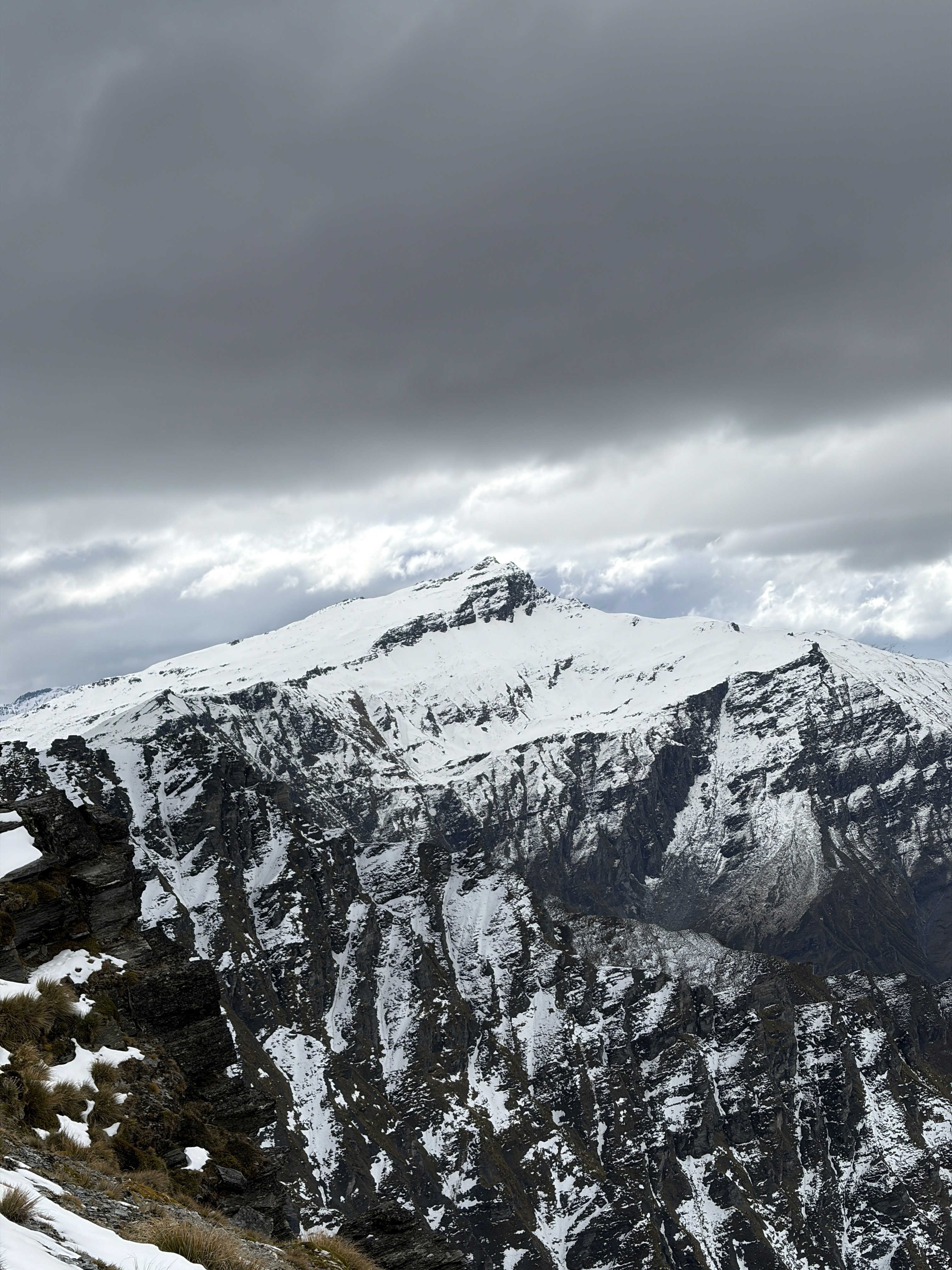
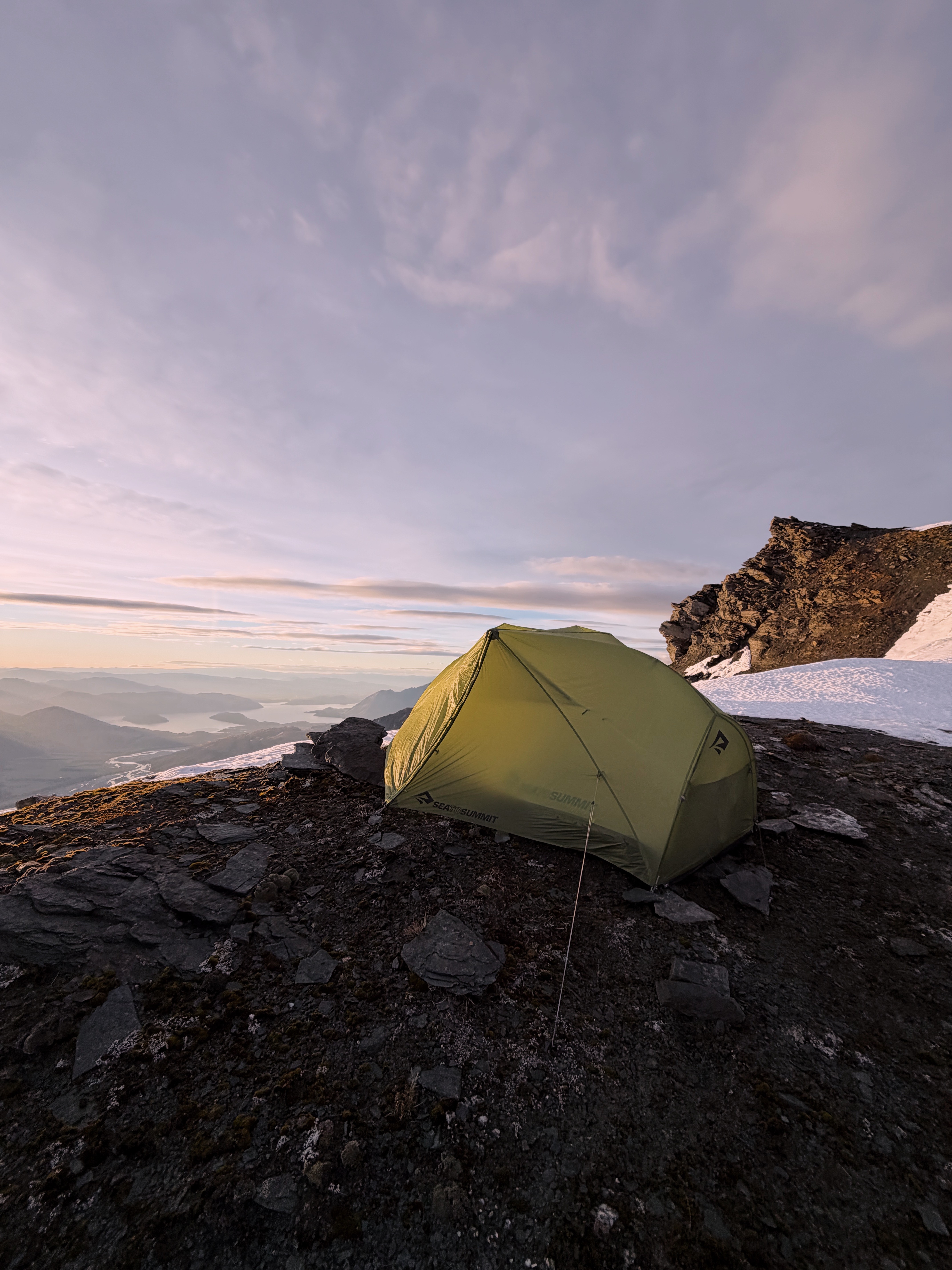
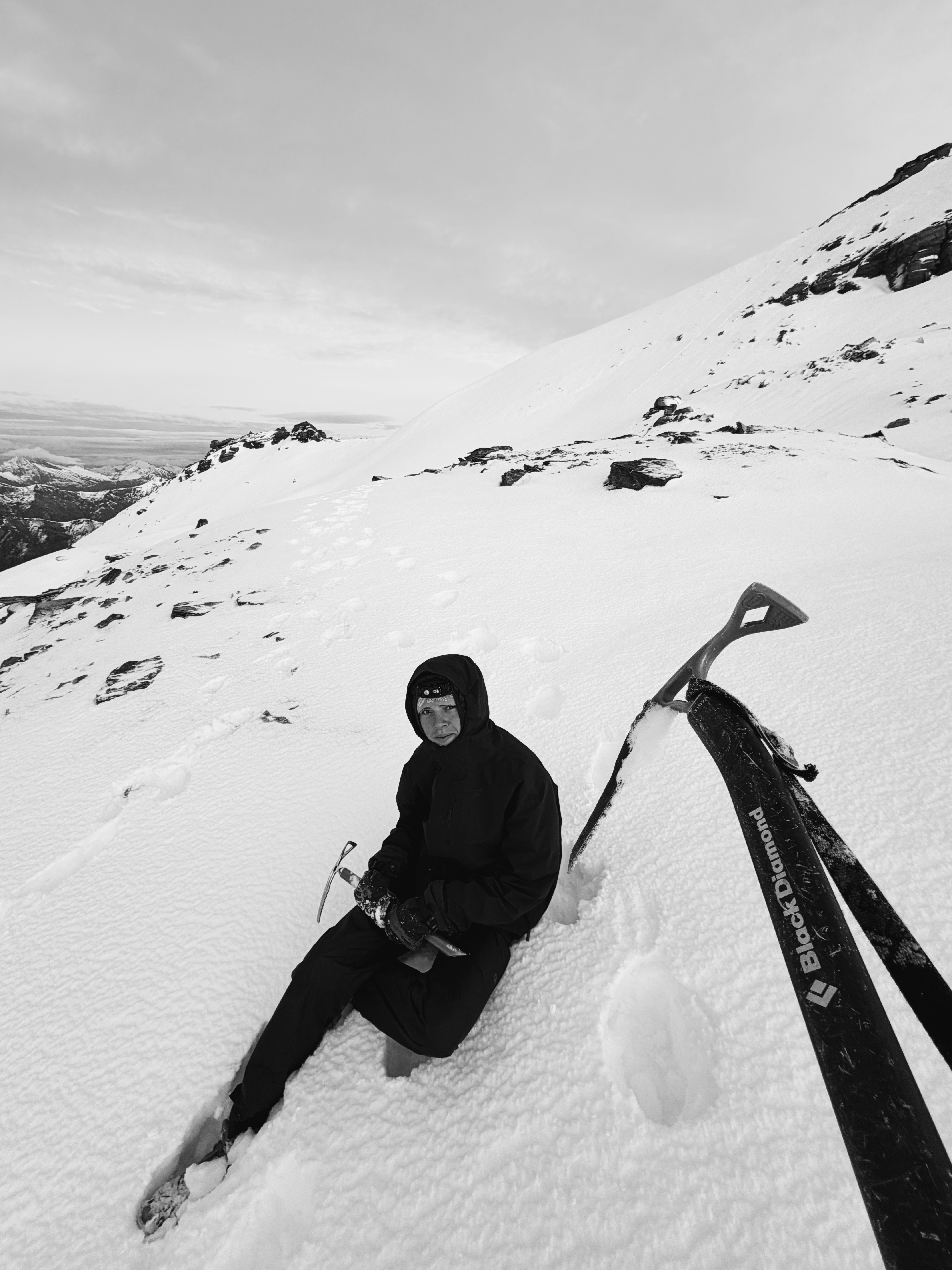
This adventure was written by Tarn Currie — Braden's son, based in Wānaka. Black Peak was a mission I did with a mate, written up here from my own perspective. Black Peak sits right above Wānaka, unmistakable against the skyline. Most people look up at it from town and think its Mt Aspiring, and we wanted to winter climb it. We drove up to the Treble Cone ski field car park and started moving up the cat track. Even getting to the base of the proper climb takes some work, the track winds up through the ski area before you're finally looking at the peak properly. From the TC summit the view opened up and there it was: Black Peak, steep-faced and serious, sitting across the saddle with that big exposed frontal face. People often look at it from the Wānaka foreshore and mistake it for Aspiring. Standing there, you understand why. We climbed down to the saddle and were almost immediately into the snow. It was late April but firmly winter conditions, knee-deep in places, heavy and consolidated in others. The fixed rope line that gives access to the upper mountain was completely buried. We had to dig around to find it and the carabiners before we could clip in. That was the moment we put the microspikes on and didn't take them off until we were back at the car. We pushed on and found a camp right on the main ridge. No shelter from the wind, fully exposed, but we had our Sea to Summit tent, pegged it down with ice axes and solid guy lines, and it held. Pasta on the gas cooker, then into the sleeping bags as the rain came in. Cold, dark, windy. Properly in the mountains.
The Summit Push
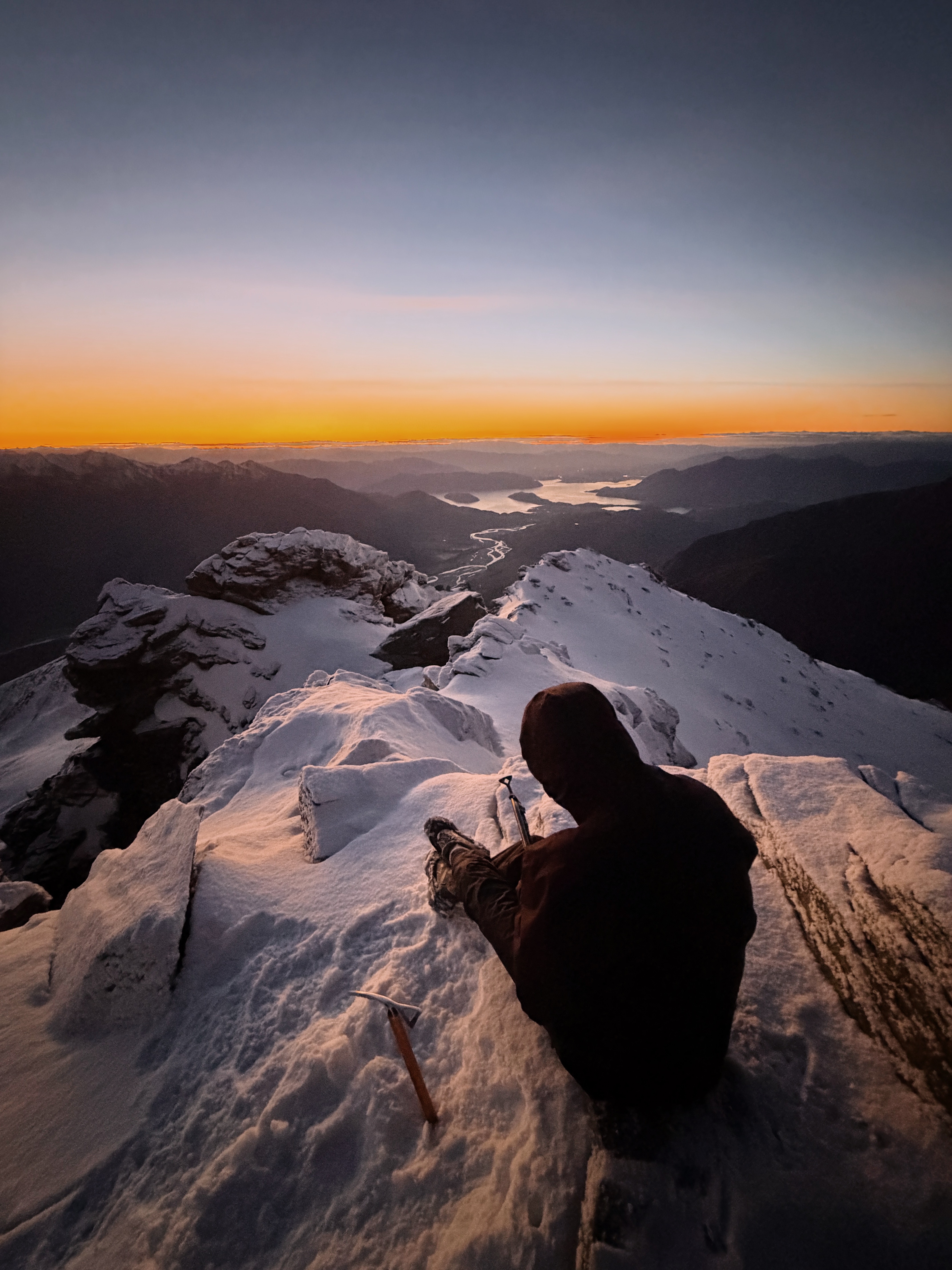
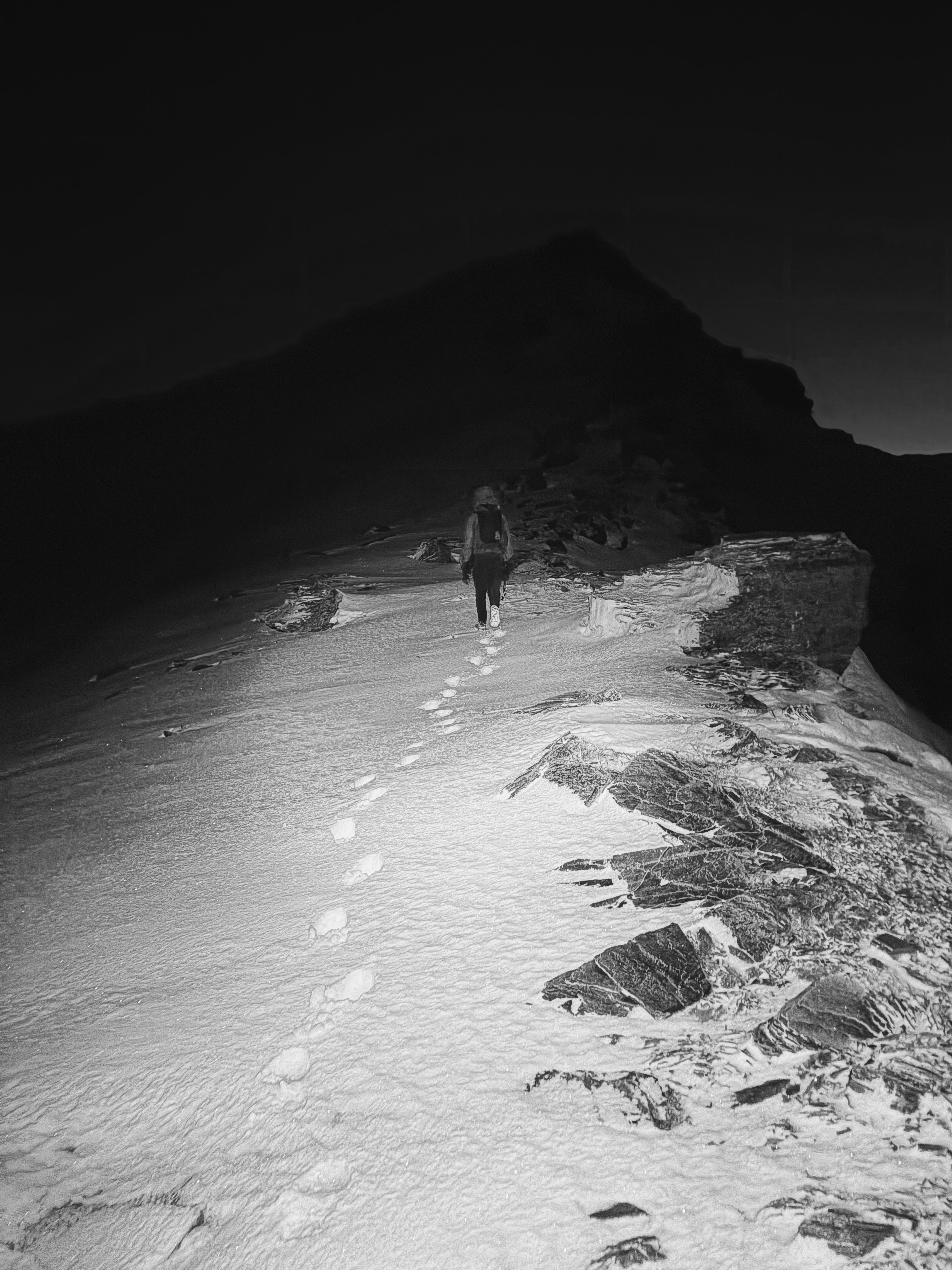
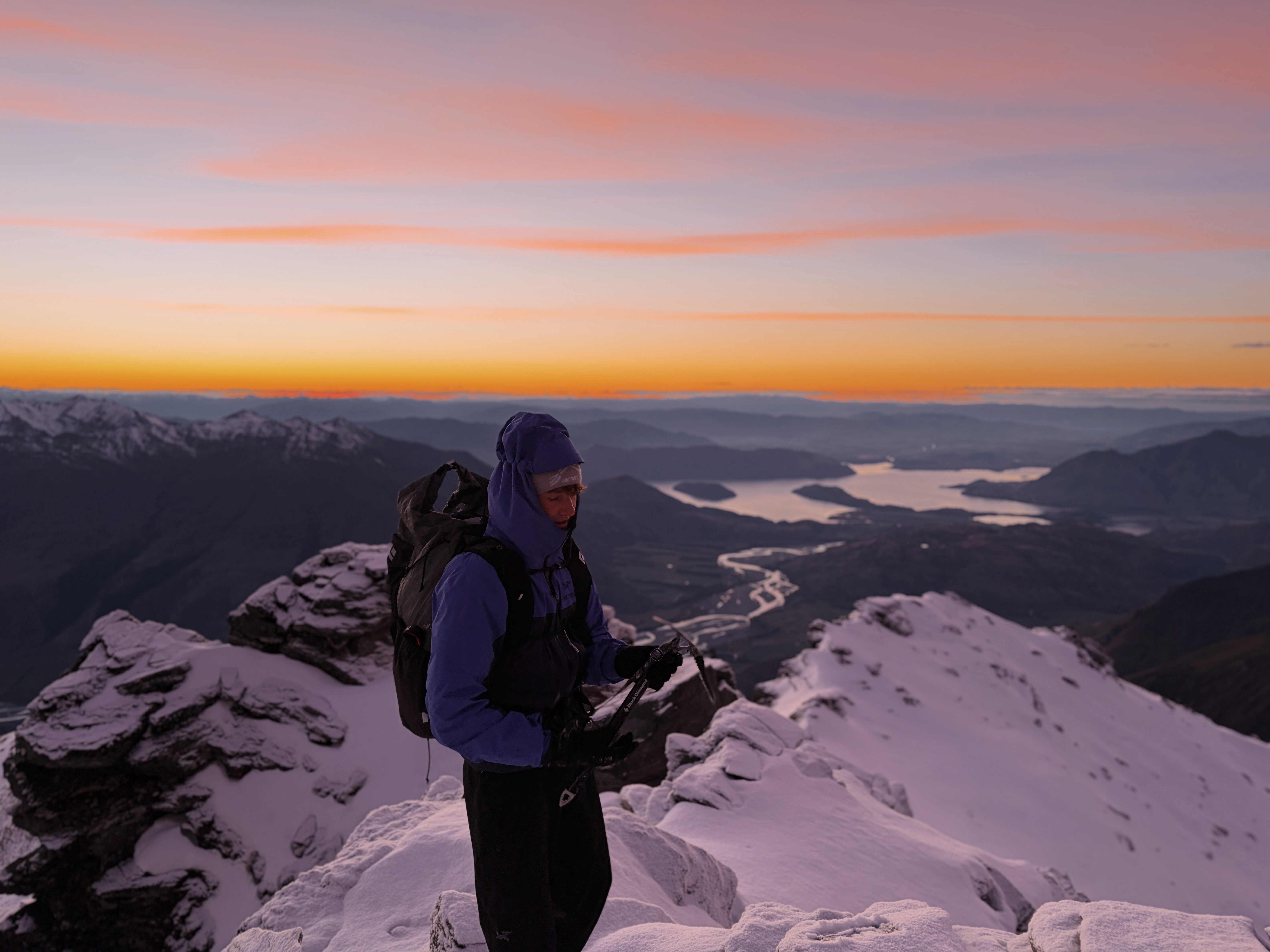
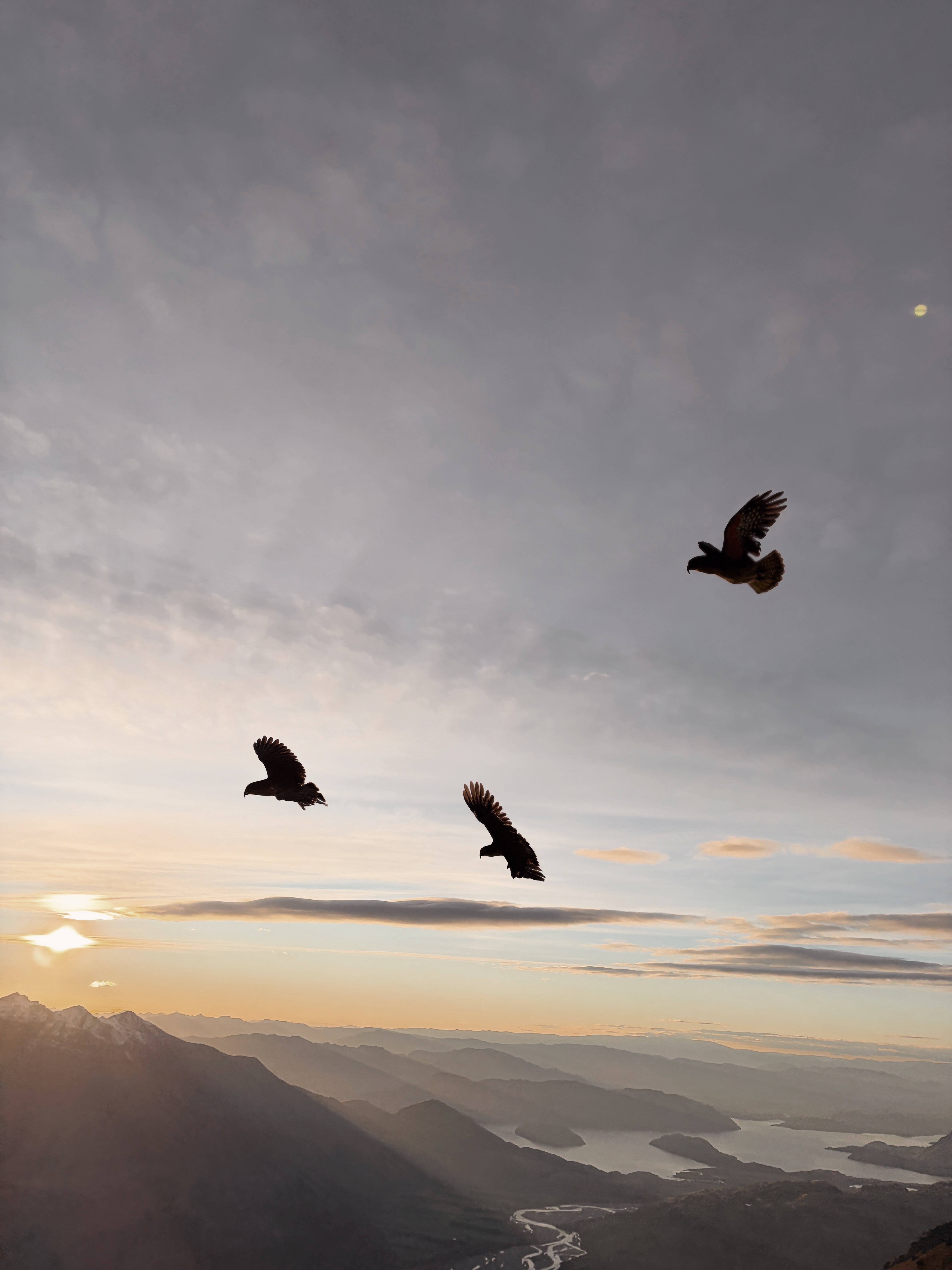
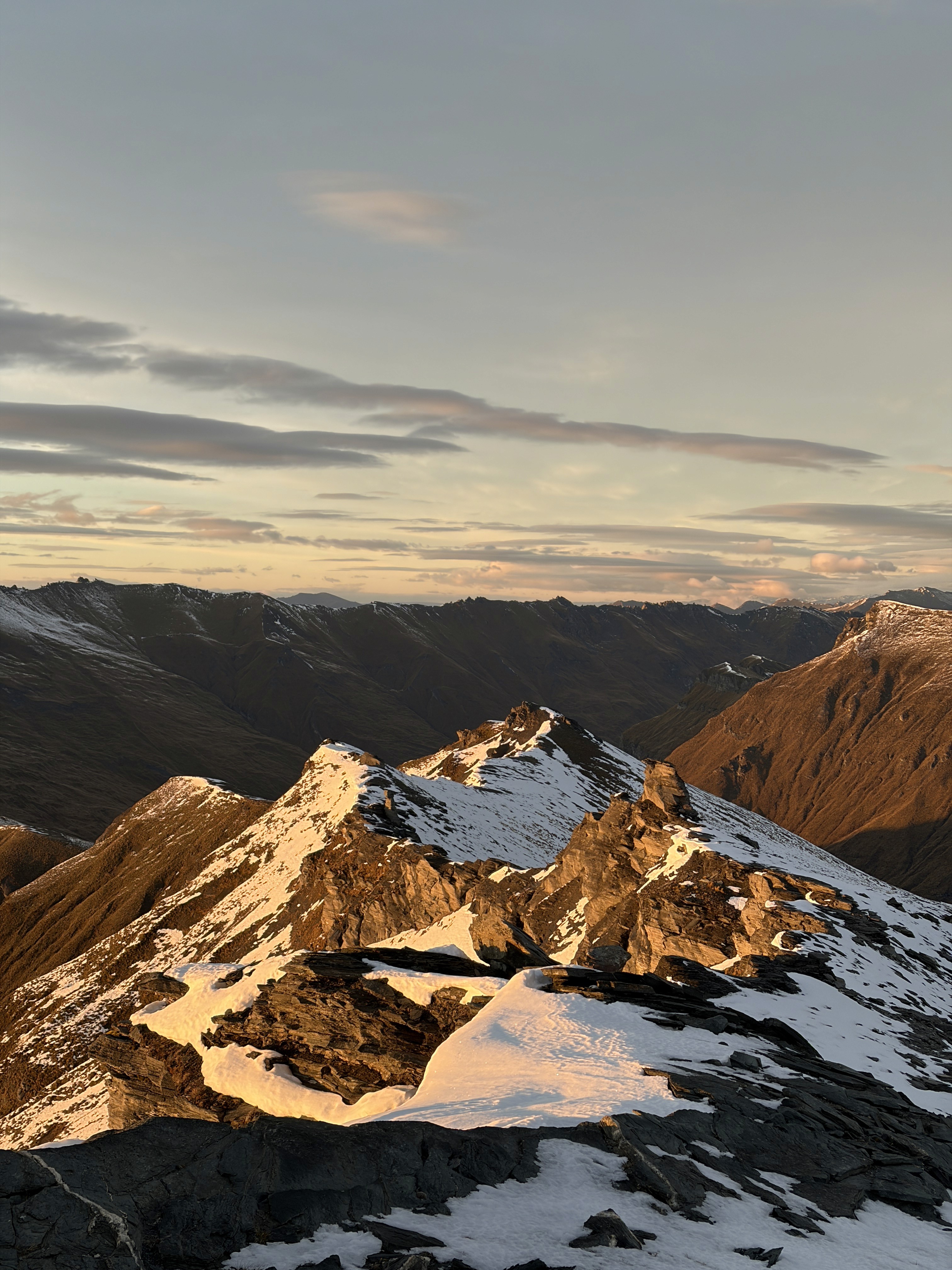
We were up at 4.30 and moving by around 5. The push to the summit from camp was around an hour and a half of sustained climbing, steep snow and ice, torches on, axes in hand. It wasn't as cold as expected which helped, but there was nothing casual about the terrain. You had to earn every metre. We topped out around 6.30 and caught the very first light breaking over the ranges. We sat there for close to 45 minutes and watched the sunrise come in properly. That was the whole point. Then came the chaos of packing up. A kea swooped in, grabbed my sleeping bag, and sent it rolling down the snow face, it just kept accelerating and didn't stop for about a kilometre. Took a while to recover that one. The descent was all about control sliding sections using the axes for self-arrest, working back through the rope section, over the top and finally back to the car. Around 13.5 km return and roughly 1,750 m of elevation gain. It took us 5 hours up on the first day and around 6.5 hours back on the second day, including the 1.5 hour summit push. In summer without the snow you'd be moving faster on everything, so a solid day mission. A big thanks to Bivouac Outdoor for kitting us out, every piece performed exactly as needed in full winter conditions. The Black Diamond ice axes were essential for the ascent and self-arrest on the way down. The Black Diamond Beta Light 45L pack was light and comfortable while fitting everything we needed and keeping it completely dry. The Sea to Summit Telos TR2 Plus Ultralight tent held up well against a windy, wet ridge night and kept us warm. The Sea to Summit Ether Light XR Insulated Mat and Sea to Summit Spark Ultralight -18° Down Sleeping bag meant we slept well despite the conditions. And the MSR PocketRocket 2 stove had pasta on the boil in minutes. Thanks also to Garmin , the Fēnix 8 Sapphire Solar had the route loaded and was faultless for navigation in the dark, and the inReach gave us the safety net you want when you're that far out in winter.
Route Description
Access
Drive to Treble Cone ski field, around 40 minutes from Wānaka. In winter you'll need to pay to access the ski field. In summer access is free — there's a lockbox on the post to the left of the gate (code 2711, worth checking at treblecone.com for updates).
Note: the ridge crosses around 2.5 km of private land belonging to The Branches Station. Call them on 03 441 8421 for permission before heading up. They're easy about it but ask for the heads up for safety reasons, mainly in case they have hunters out culling deer or goats.
The Route - Credit to tussock.rocks/blog/trebleblack, go to there page for images of route desciption and more of this infomation.
From the car park, follow the 4WD cat track up through the ski field. Leave the track near the top and make your way through tussock and easy scree up to the Treble Cone summit area. From there, descend the steep northern face — it's loose and a bit scrappy for about 15 metres, then settles down.
From the saddle below Point 1904, the route sidles along a steep and crumbly rock face. There's a fixed chain section here — treat it as a guide and emergency handhold rather than something to hang your weight off, as it's not maintained. This is one of the more committing sections of the whole route.
After the chains it opens up into a long undulating ridge walk — tussock, scree, and a faint impact track with sporadic cairns. There's another steep and crumbly section around Point 1826, which is the other tricky bit. Both ways have their merits; the higher line is quicker.
From there the ridge narrows and becomes more fun — stable rocky ground with good footing, a few interesting rock formations, and great views both ways. Eventually leave the ridge and cut across the south face scree to gain the final ridge between the south and west faces. From there it's a straightforward push to the summit at 2,289 m.
In Winter
Expect knee-deep snow for much of the upper route and full burial of the fixed rope section — you'll need to dig to find the anchor. Ice axes and microspikes are essential. Camp on the main ridge is exposed to wind from every direction so peg down well.
Stats
Around 13 km return, 1,750 m elevation gain. Summer day: 9–11 hours. Winter overnight: plan for two days.