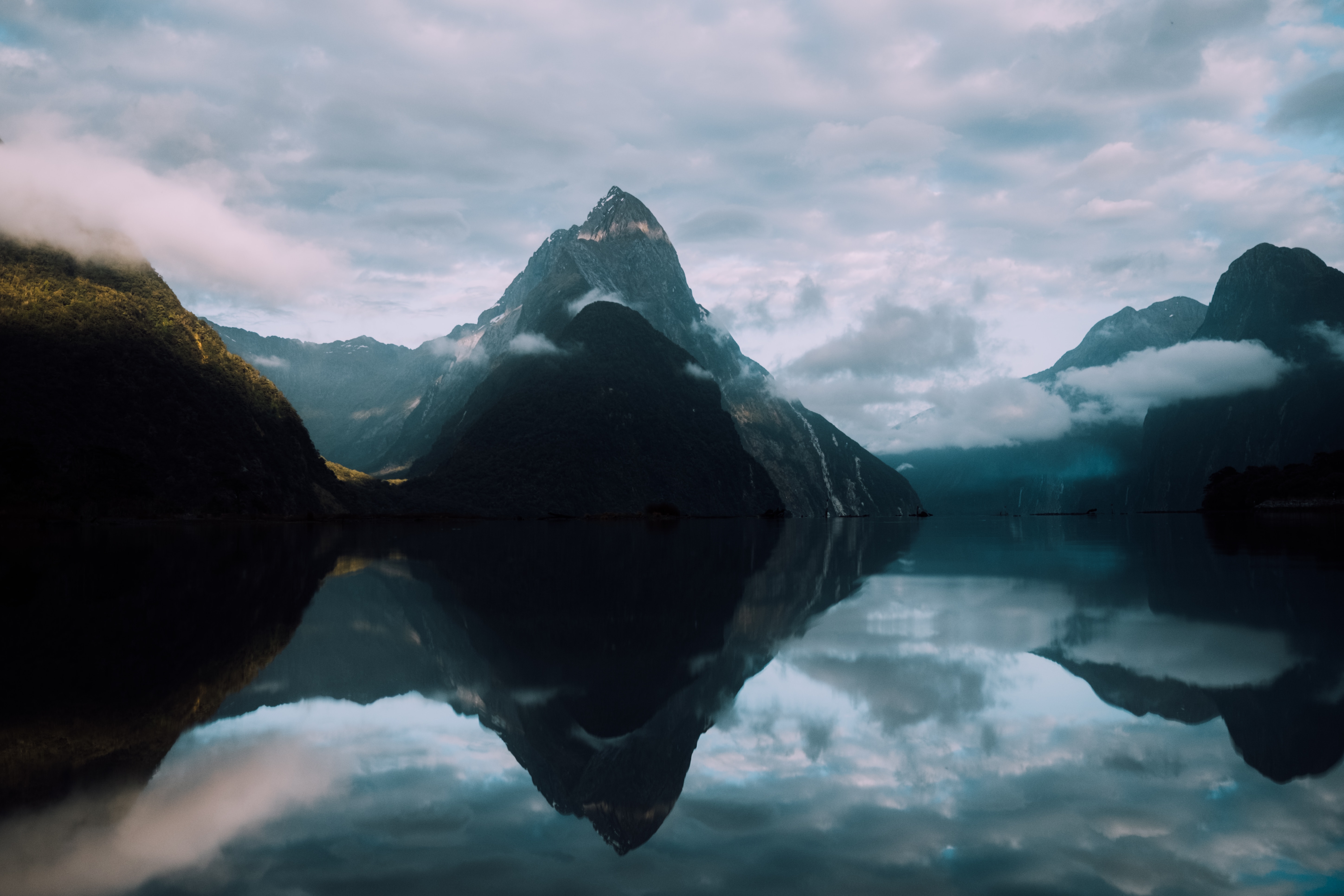
Esquilant Bivvy
A winter overnighter up to the Esquilant Bivvy plan of climbing Mount Earnslaw, deep river crossings up the Rees Valley, a long climb into the ice, and a 90 km/h night on the tops that turned us around just short of the East Peak.
Read:
5 mins
Location:
Glenorchy, New Zealand
Date:
Our Journey
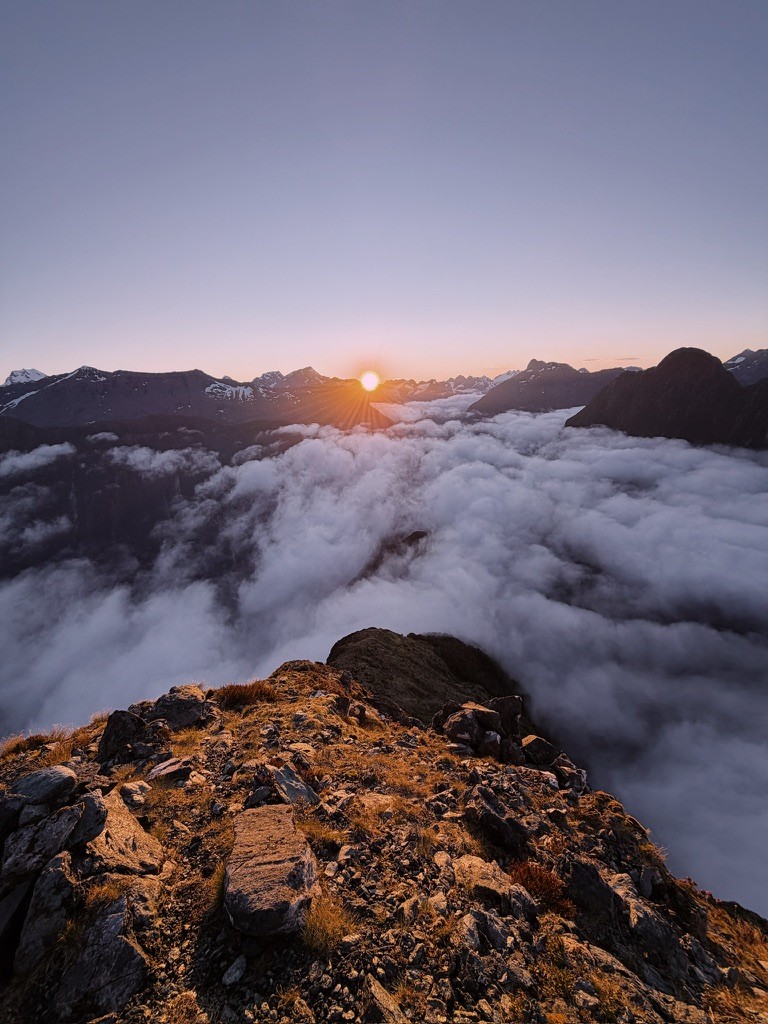
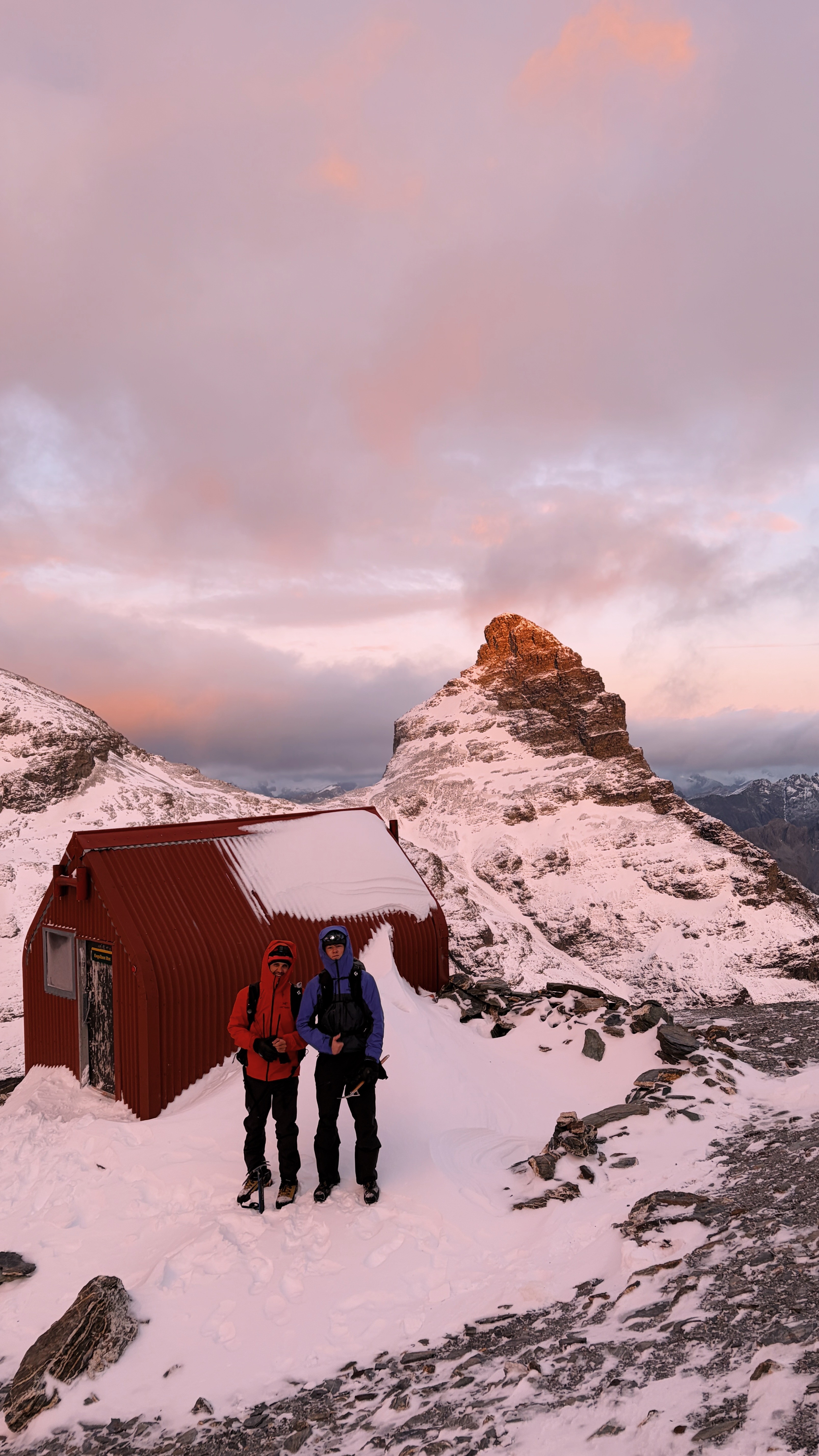
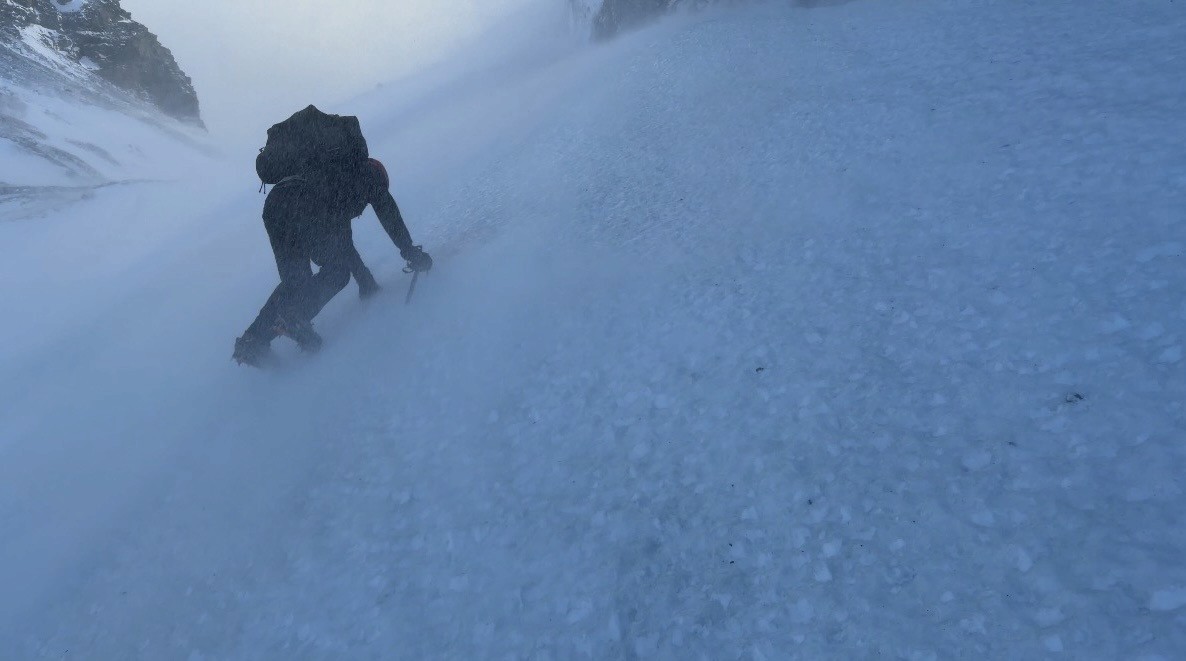
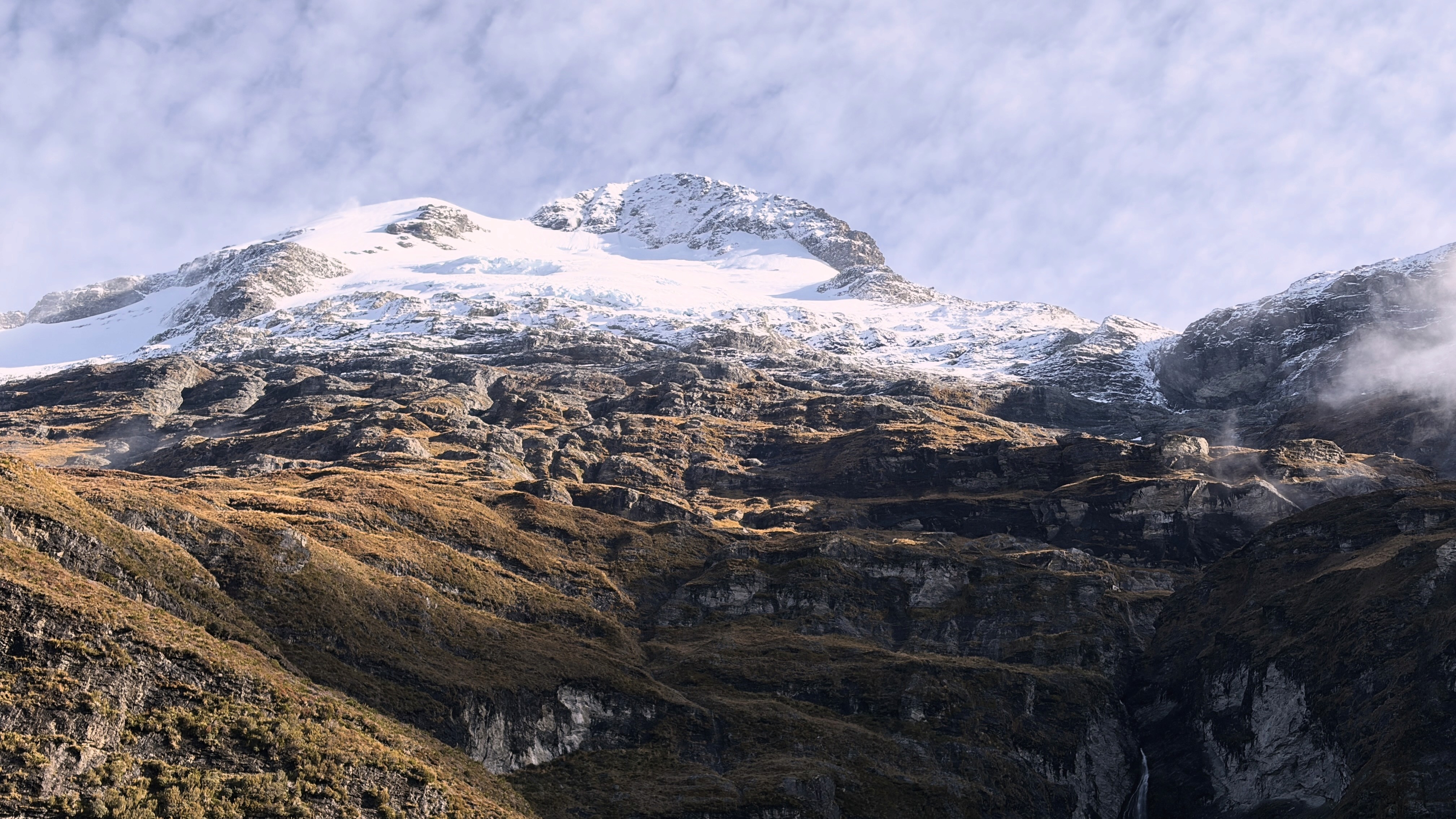
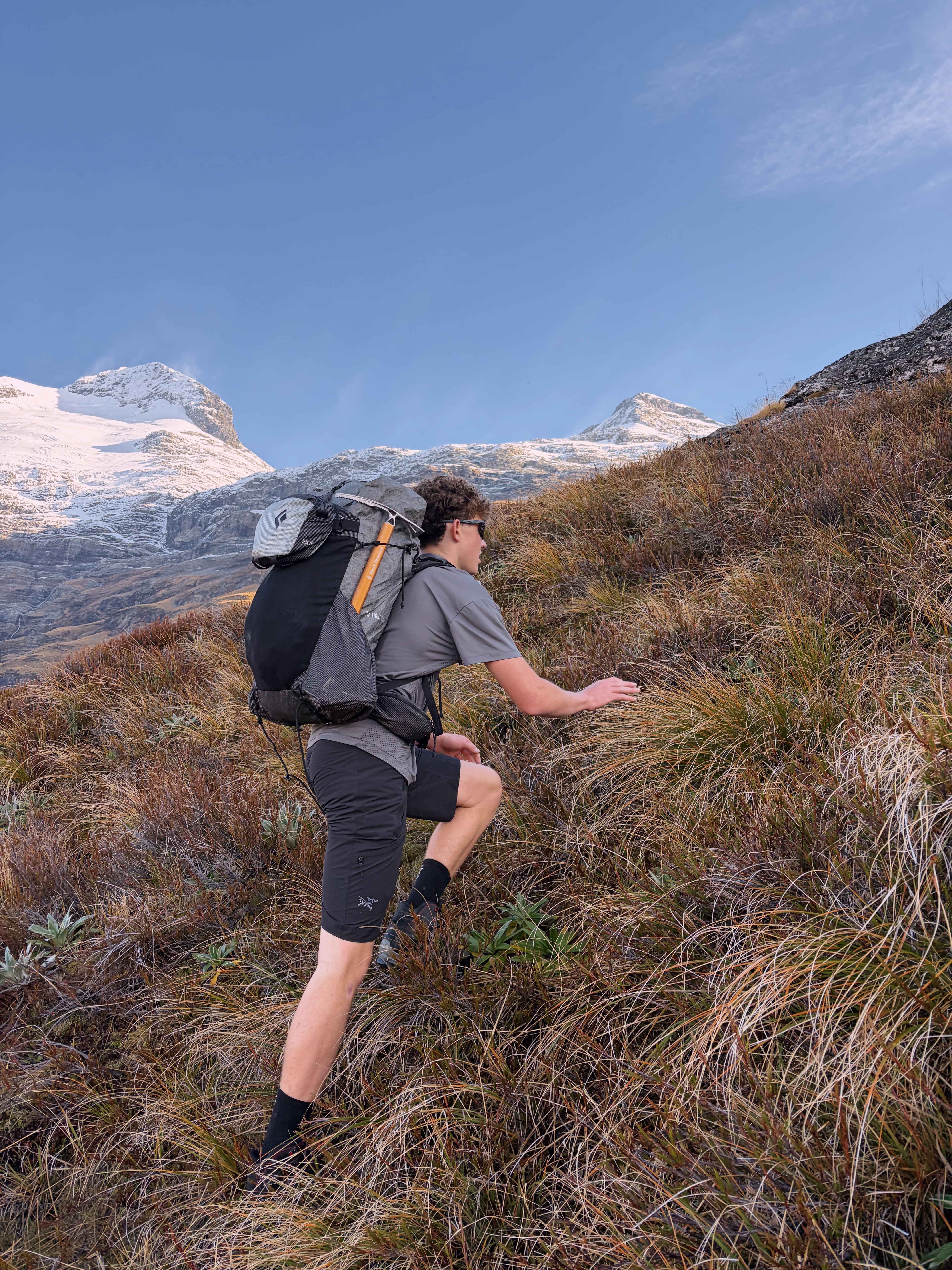
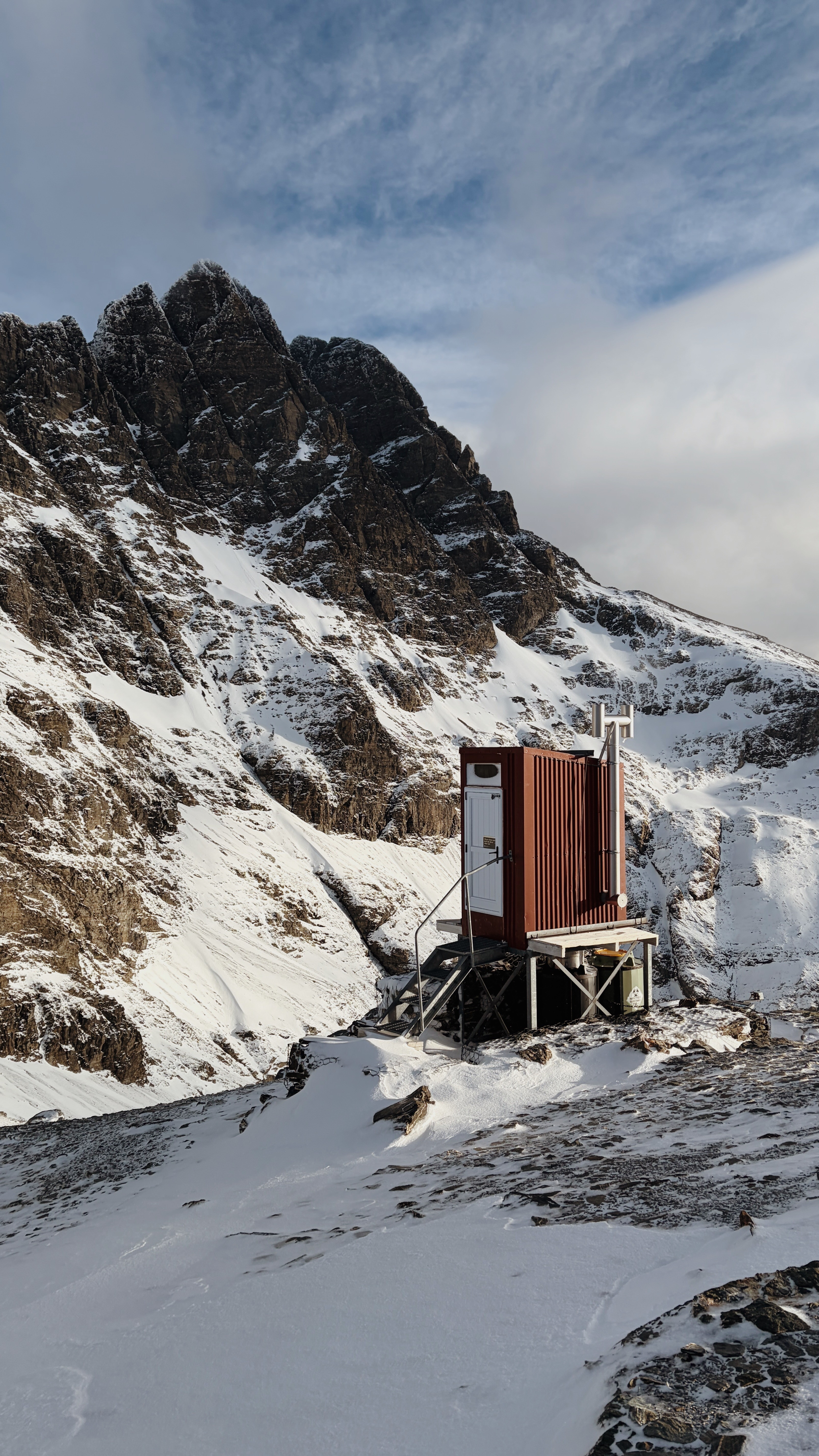
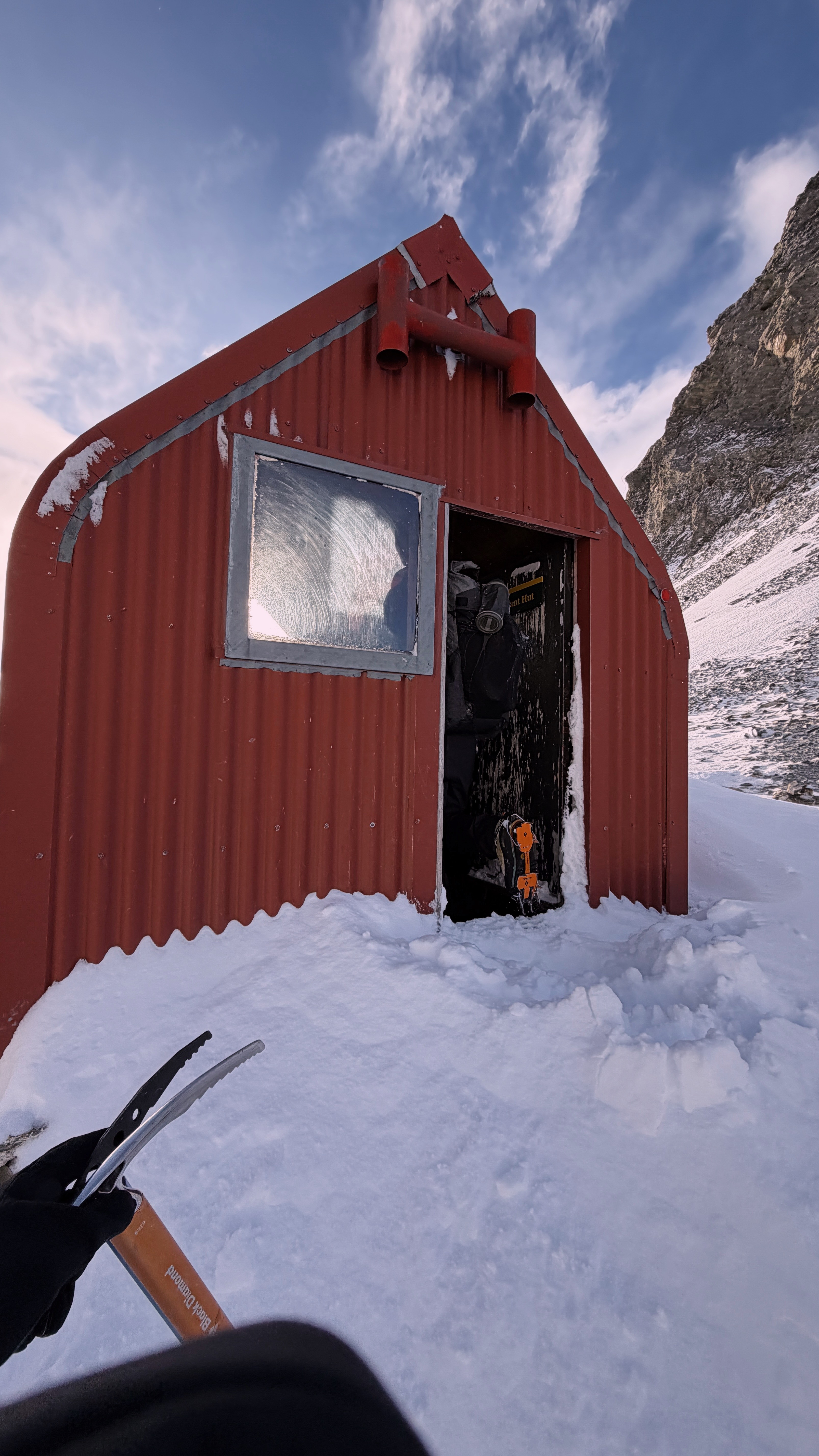
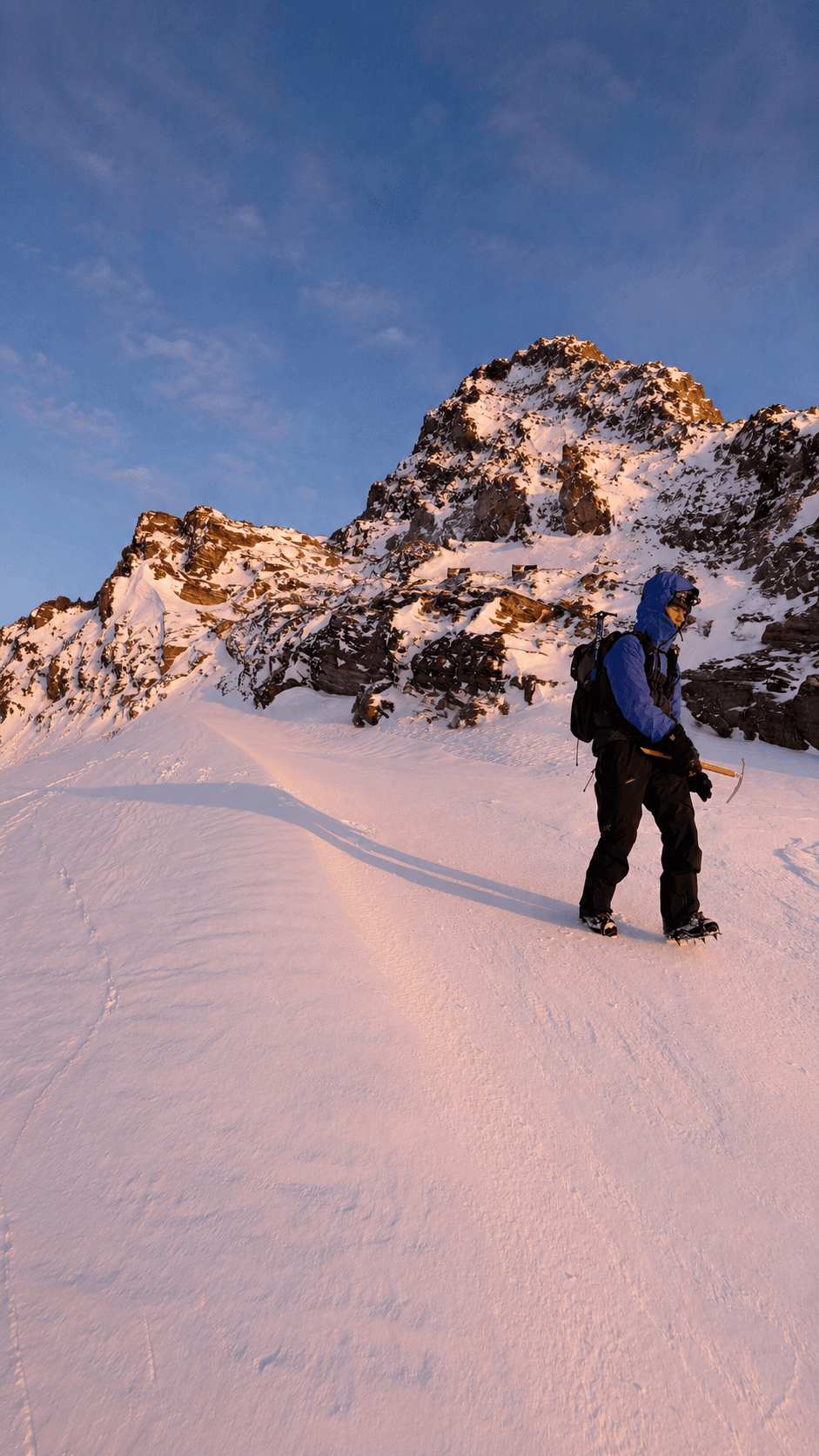
This adventure was written by Tarn Currie, Braden's son, based in Wānaka. Mount Earnslaw was a mission Dad and I did together, written up here from my own perspective. Earnslaw, or Pikirakatahi, sits at the head of the Rees Valley above Glenorchy, twin-peaked and unmistakable. The plan was to get up to the Esquilant Bivvy below Wright Col, sleep up there, and have a crack at the East Peak summit (2,819 m) in the morning. Getting in starts with the drive up the Rees Valley, and that's an adventure on its own. There's some relatively deep river four-wheel driving to get through, semi-easy but not nothing, and the Ineos Grenadier Quartermaster handled it all great. From the end of the road we shouldered the packs and started walking. It took us around four hours to get up to the hut. We moved through some quick terrain low down and passed a few really cool bivvies tucked into the valley before the track properly turned upward. The last push was about two and a half hours of solid climbing. We stopped to put on crampons and warm gear for the icy section, and with the crampons and ice axes on we got through that part with ease. The wind was the real story though, high and bitterly cold, which made the upper section more of a challenge than the terrain itself. We finally made it to the bivvy around 4pm and settled in, just chilling out of the worst of it while the wind hammered the hut. The others we'd seen back at the trailhead rolled in around 6, and from there it was a pretty mellow evening. A chill night in good company, high in the mountains.
The Turnaround
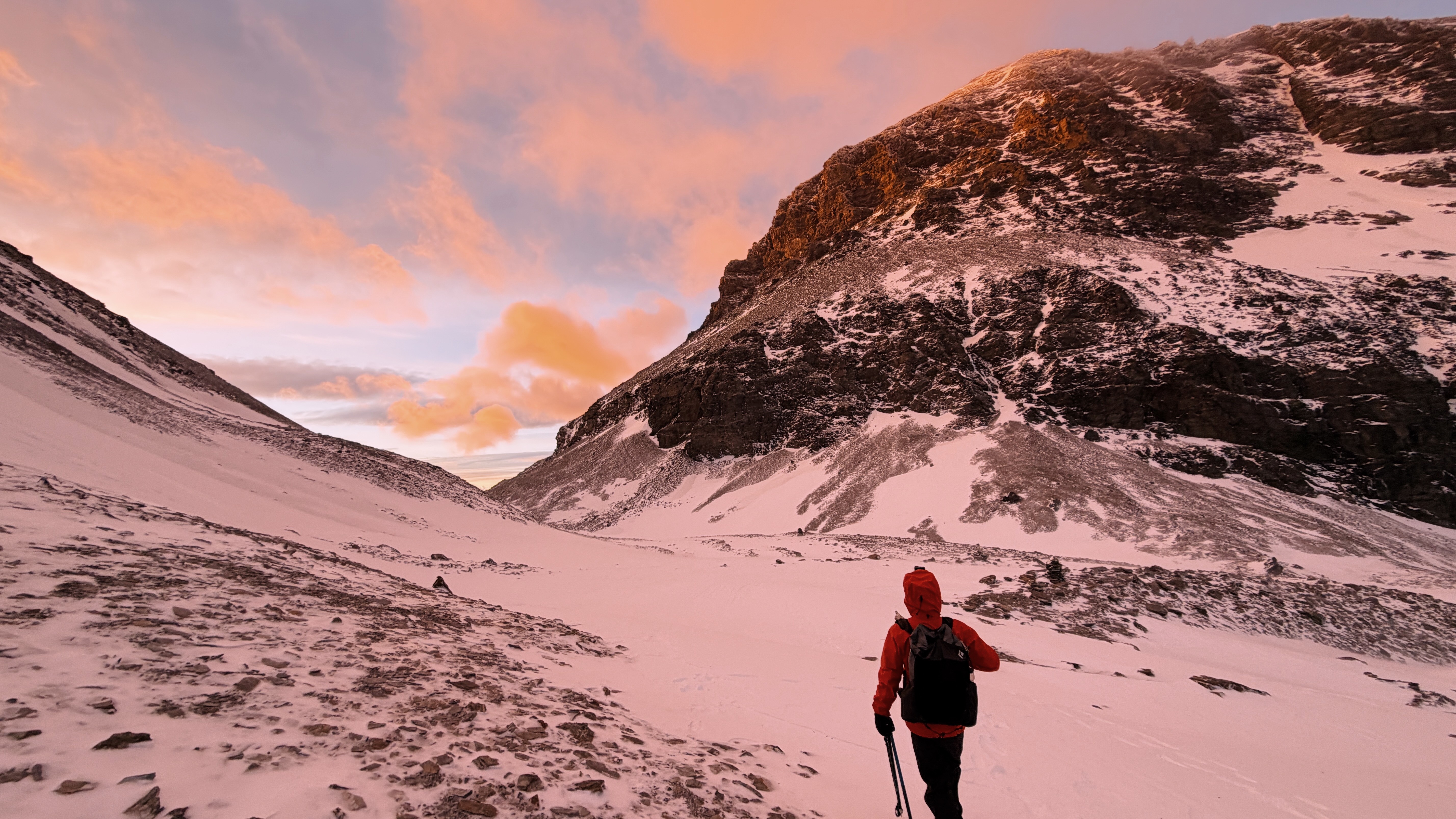
Through the night the wind absolutely ripped. We're talking 90 km/h gusts, so loud inside the hut that you'd swear it was coming apart, even though the bivvy itself is properly sturdy and never budged. Morning came in clear, which is usually the green light you're hoping for. But clear doesn't mean safe. The wind hadn't backed off, and a summit push on exposed terrain in that kind of gust just wasn't worth the risk for what we'd get out of it. So we made the call to turn around. Never an easy one when the sky's blue overhead, but the mountain wasn't going anywhere, and neither were we if we played it stupid. The standout moment of the trip, and the one I'll be giving Dad grief about for a while, was the GoPro. I checked with him right at the start. "GoPro's fully charged, yeah?" "Yep, fully charged." Get up to the hut, I ask, "You recording with the GoPro?" "Yeah, it's going." Forty minutes later he goes, "Hey, is the GoPro actually recording?" I check it. Fully dead. Classic. With the summit off the table, we packed up and dropped back the way we'd come, retracing the icy upper section with the crampons and axes before the long walk back down the valley to the river and the car. The numbers: 10 km and roughly 1,900 m of gain on the way up, four hours total with three hours twenty of moving time. The descent was the same distance back down, three hours total with two hours forty moving. Two solid days in the hills, and even without the summit, exactly the kind of mission that's worth doing.
Route Description & Gear
Route Description
Access
From Glenorchy, drive into the Rees Valley to the end of the road. The upper valley involves multiple river crossings, so a capable 4WD and reasonable river levels are essential. From the road end it’s a walk up the valley floor to the Kea Basin track turnoff.
The Route
Cross the Rees and climb through beech forest up to Kea Basin, a natural halfway point with a sheltered bivvy rock just off the track. From Kea Basin the route climbs through alpine scrub and rock slabs, then onto the remnant Birley Glacier, working up to Wright Col and the small Esquilant Bivouac Hut just beyond. The hut sleeps around six and sits fully exposed on the tops.
From the bivvy, the East Peak (2,819 m) is climbed via the North Face. From summer onward it’s largely a rocky scramble of around 600 m with one short crux, an awkward chimney where a rope is sometimes used. In winter the picture changes completely.
In Winter
Expect ice and snow on the climb up to Wright Col, with crampons and ice axes essential from well below the col. The bivvy is exposed to wind from every direction, so this is a place where the weather makes the decision for you. We had clear skies on summit morning but sustained 90 km/h winds, which was enough to turn us around below the top. Build in spare days and be ready to walk away.
Stats
Around 10 km and 1,900 m of gain from the road end to the bivvy. We climbed it in four hours (3h20 moving). Plan for a two-day winter trip with a night at the bivvy or Kea Basin.
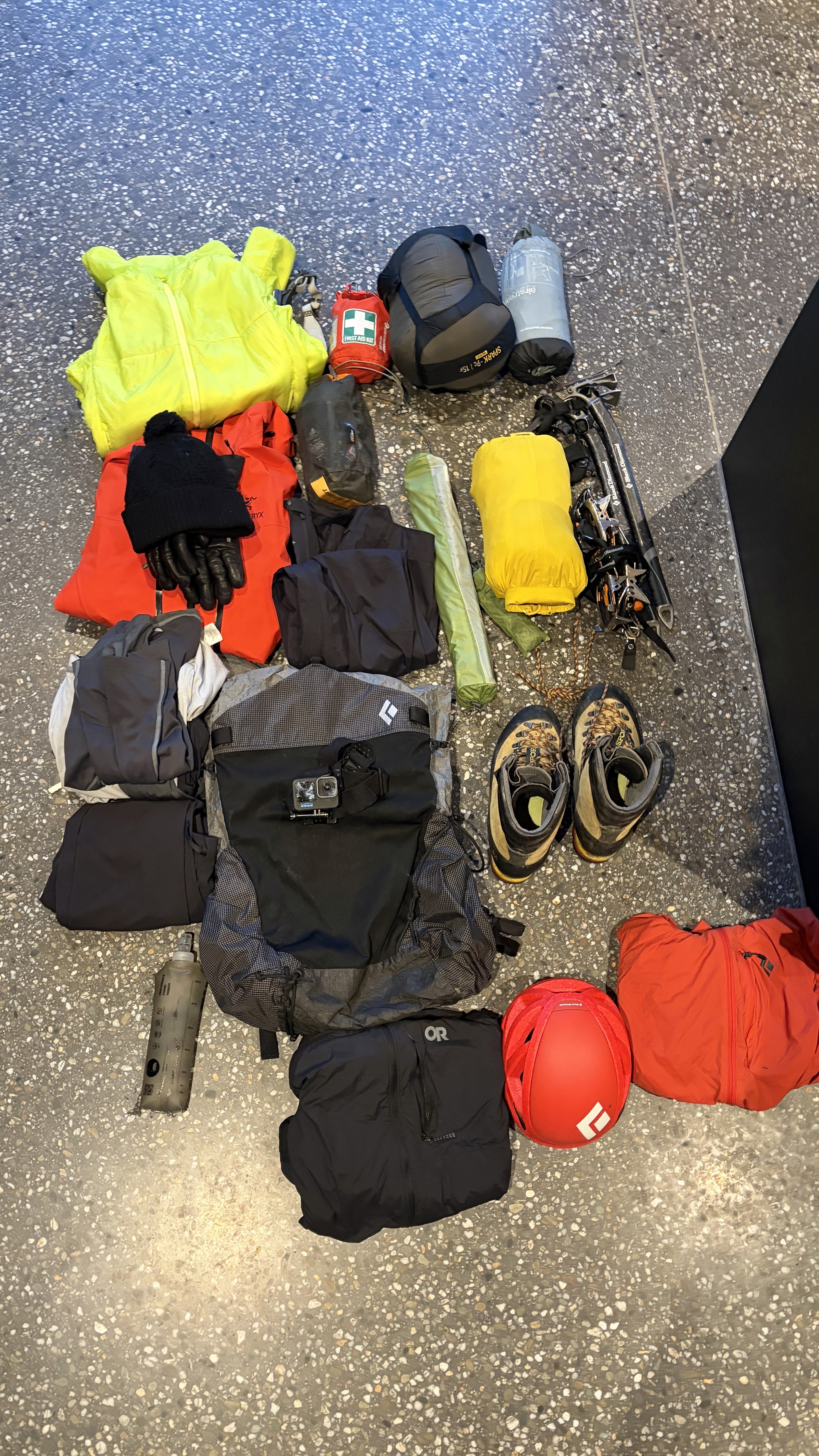
Gear We Brought
(All high-quality items, kitted out by Bivouac Outdoor, run through full winter alpine conditions)
🧥 Clothing Layers
Waterproof shell
Arc’teryx Men’s Alpha SV Jacket – the benchmark GORE-TEX Pro alpine hardshell, fully waterproof and built for exposure
Down jacket / puffer
Arc’teryx Men’s Nuclei Hoody – lightweight synthetic-insulated puffer, warm even when wet
Outdoor Research Men’s Helium Down Hoodie – 800+ fill lightweight down puffer
Insulated mid-layer
Mid-layer fleece
Black Diamond Coefficient LT Hybrid Hoody (Men’s) – breathable hybrid mid-layer
Black Diamond Alpenglow Pro Hoody (Men’s) – warm fleece option
Base & Active Layers
Thermal top and leggings
Outdoor Research and Black Diamond base layers (merino / synthetic)
Black Diamond Alpine softshell pants, with Outdoor Research rain pants over the top for the wet sections
🧤 Headwear & Hands
Beanie
Outdoor Research Vigor Plus Beanie – warm and versatile
Gloves
Black Diamond Guide Gloves – warm, weatherproof alpine gloves
👟 Footwear
Asics Men’s Trabuco 14 – grippy trail shoes for the valley and the approach
Switched to alpine boots for the icy upper section
3x Socks
🪖 Safety & Navigation
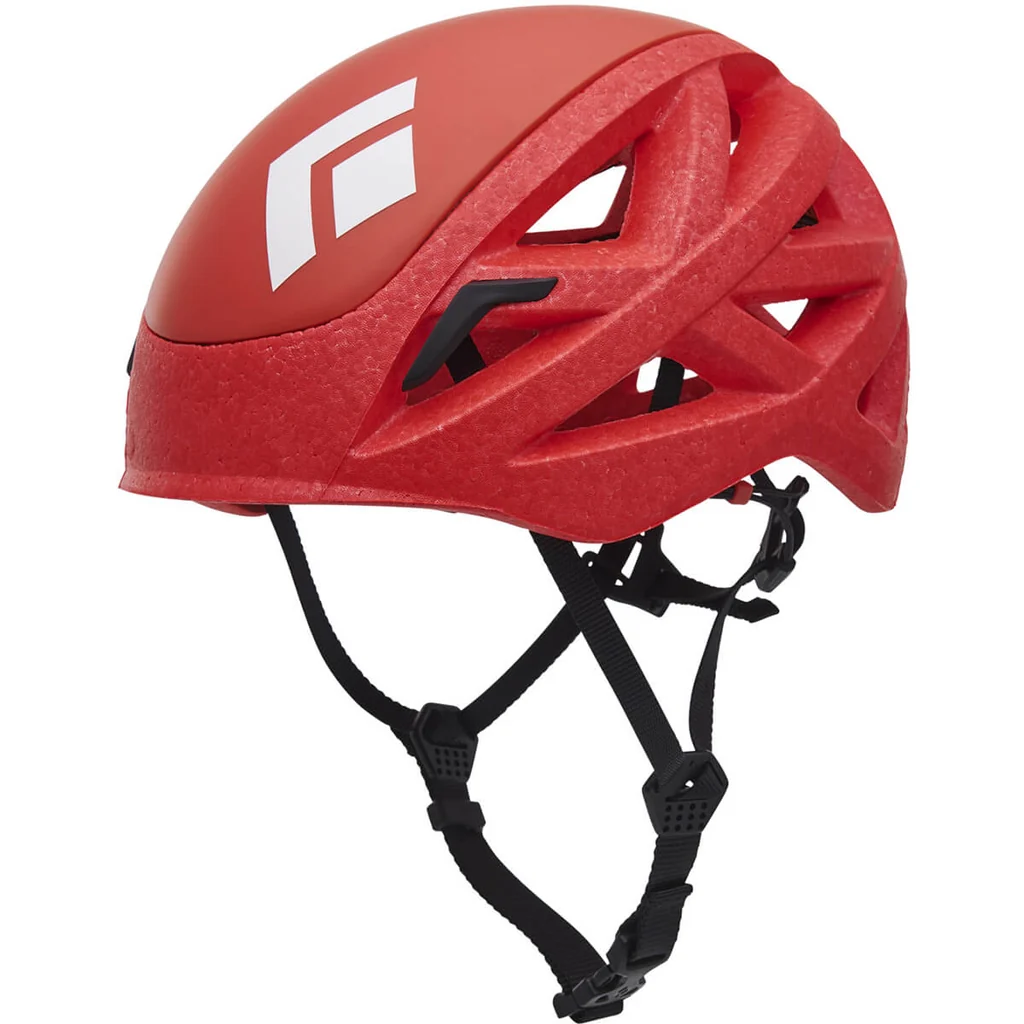
Climbing helmet
Black Diamond Vapor Helmet
Crampons
Black Diamond Sabretooth Pro Crampon
Ice axe
Black Diamond Venom Ice Axe / Hammer
Navigation
Garmin Fēnix 8 Pro with uploaded GPX route – any watch works as long as it can navigate off course files
NZ Topo app on phone (offline maps)
Satellite messenger / PLB for backcountry safety
🎒 Packs & Storage
Pack
Black Diamond Beta Light 45 Backpack – light, waterproof, fits a winter overnight load
Dry bags
Sea to Summit dry bags – kept everything dry on the way up
🛏 Shelter & Sleep
(Sleeping at the Esquilant Bivvy, so no tent this trip)
Sleeping bag
Sea to Summit Spark -9°C Down Sleeping Bag
Sleeping mat
Sea to Summit Insulated Mat – carried as backup in case the hut was full
🍽 Food & Cooking
Real meals Freeze-dried meals
Jetboil
High-calorie snacks
💧 Water
Soft flasks – carry water from the start
📷 Other
GoPro for filming (charge it next time, Dad)
🧰 Extras Worth Taking
Headlamp with spare batteries
Sunscreen
Powerbank (phone / Garmin backup)
First aid and emergency supplies
Small blister & repair kit
bivouac.co.nz
Vapor Helmet
Ultralight, low profile protection in any climbing situation now even lighter.